AI room design quality benchmark
Does your AI room design actually work?
Compare your original room with an AI concept using a free, tool-agnostic checklist. Check architecture, walking routes and furniture before deciding what to keep. This is your visual assessment, not an automated image analysis.
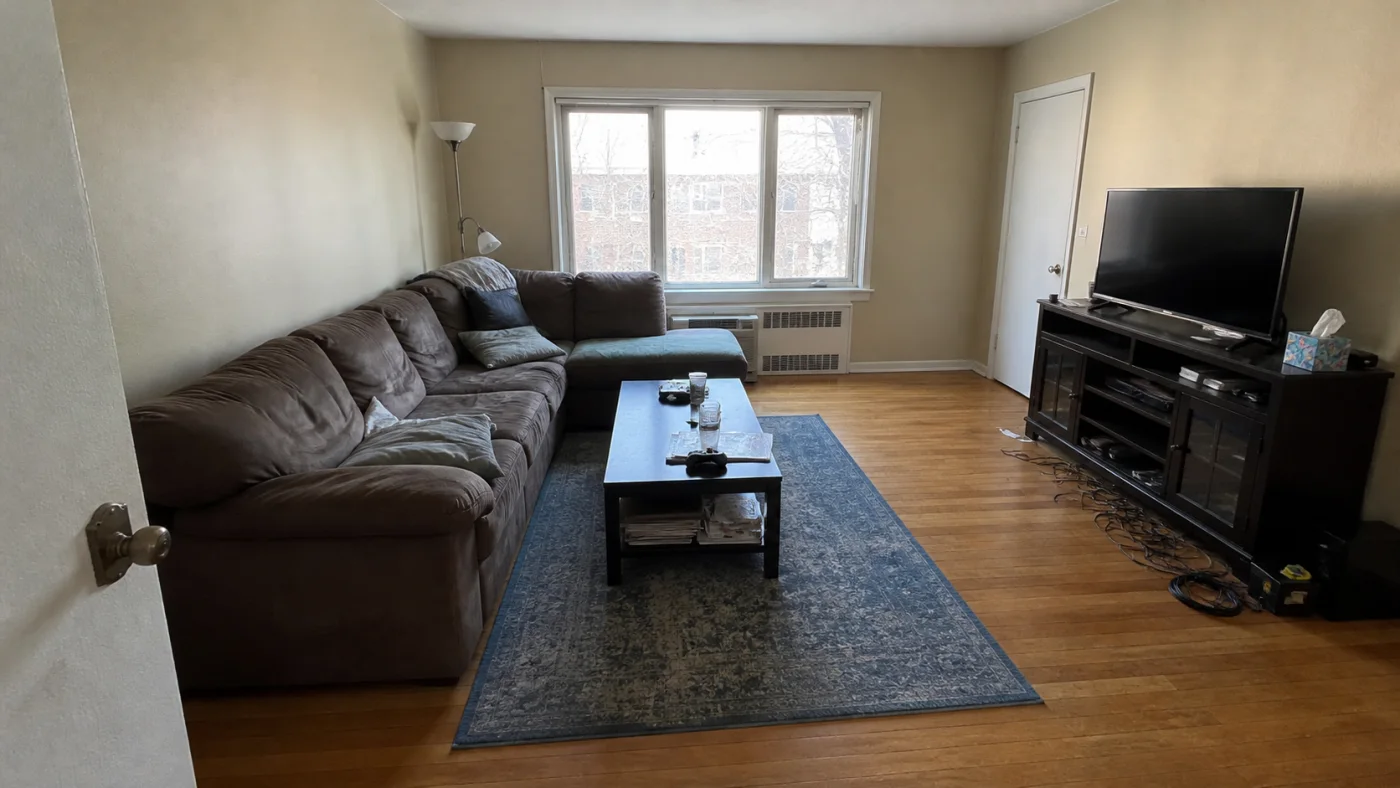
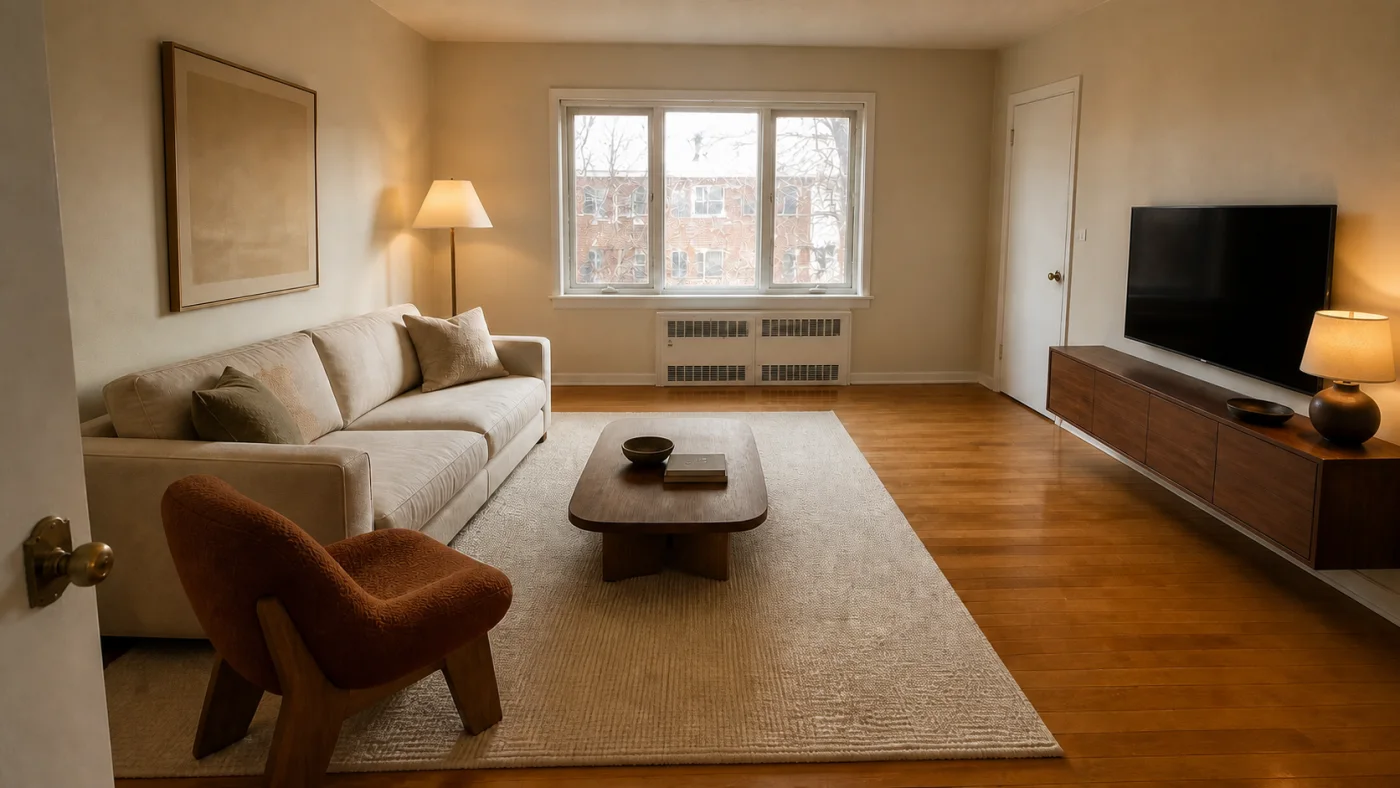
Check your AI room design
Free, with no account or credits needed. Enable JavaScript to compare optional local photos, complete the checklist and download your review. Photos are not uploaded by this checker.
Automatic failures
- Furniture blocks an entrance or required route.
- A fixed opening or room boundary disappears or moves.
- The camera viewpoint changes enough to show a different room.
- The room loses its intended function.
Architecture and viewpoint · 5 points
- Windows remain in their original positions.
- Doorways remain in their original positions.
- The visible wall boundaries remain recognizable.
- The ceiling and floor boundaries remain recognizable.
- The camera angle still shows the same room.
Circulation and door clearance · 5 points
- The main entrance is visibly unobstructed.
- A continuous route through the room remains visible.
- Furniture does not visibly obstruct a door swing.
- Access to windows and fixed storage is not visibly blocked.
- People appear able to approach the main seating or work area.
Scale and room function · 5 points
- The room still supports its intended activity.
- The main furniture appears proportionate to the room.
- Furniture does not visibly intersect other furniture or walls.
- Seats, desks and tables have believable shapes and usable surfaces.
- Essential equipment or storage has a plausible place.
Design coherence · 3 points
- The colours work together consistently.
- Materials and furniture support the chosen style.
- Lighting appears coherent rather than visibly contradictory.
Practical next steps · 2 points
- I can name specific design choices worth exploring.
- I have listed the dimensions and product details to verify before buying.
Each Yes earns one point. Complete every check and flag any automatic failure. A score of 16/20 with no automatic failure passes this subjective visual checklist; it does not certify fit, safety or product availability.
The score: 20 points across five checks
Each concept is reviewed beside its source photograph at the original viewpoint. Fixed architecture receives up to five points, circulation up to five, furniture scale and function up to five, design coherence up to three, and practical actionability up to two.
In the interactive checklist, each Yes earns one point. No earns zero; leave a check unreviewed if the photograph does not show enough to judge it. A completed result requires all 20 checks and all four automatic-failure checks.
- Architecture and viewpoint: 0–5
- Circulation and door clearance: 0–5
- Scale and room function: 0–5
- Coherence: 0–3
- Actionability: 0–2
Automatic failures come before the total
A high visual score cannot rescue a blocked entrance, missing window, invented room boundary or materially changed camera position. Those failures make the concept unreliable as a representation of the source room and trigger rejection before the total is considered.
- Furniture blocks a doorway or required route
- A fixed opening disappears or moves
- The viewpoint becomes a different room
- The room loses its intended function
How a review is recorded
The reviewer keeps the source and concept visible together, records one score per category and writes a short reason for every deduction. A concept must score at least 16 out of 20 with no automatic failure to pass the visual benchmark.
The example images illustrate the review method. They are not a scored product trial. This page publishes no aggregate success rate or claim that Interizo outperforms another tool.
- Paired source-and-concept review
- Written reason for every deduction
- Pass threshold: 16/20
- No claim of measured or professional certification
What the benchmark cannot certify
This is a visual review. It cannot verify centimetre-level dimensions, structural feasibility, accessibility, fire safety, electrical work, waterproofing, live prices or whether a generated product exists. Those decisions still require measurements, retailer verification and qualified advice where appropriate.
- Visual plausibility, not construction approval
- Generated dimensions are estimates
- Retail facts require source checks
- Consequential work needs a qualified person
From photograph to room design
- Upload a clear photo of the room.
- Choose a design style.
- Download the completed design from your account.
AI room design quality benchmark FAQ
Why use a 20-point benchmark?
A checklist makes your judgments explicit. It is a subjective editorial rubric, not a scientifically validated quality score. The threshold is a practical review rule chosen by Interizo.
Does 16 out of 20 guarantee that furniture fits?
No. Passing means the concept is visually plausible under this rubric. Every real dimension and clearance still needs measurement.
Does this tool analyse or upload my images?
No. You make the visual judgments. Optional photos stay in your browser; this checker does not upload them. Download your text review before leaving because inputs are not saved.
Can another AI room tool use this rubric?
Yes. The criteria are intentionally tool-agnostic so anyone can compare a source photograph and generated concept more critically.